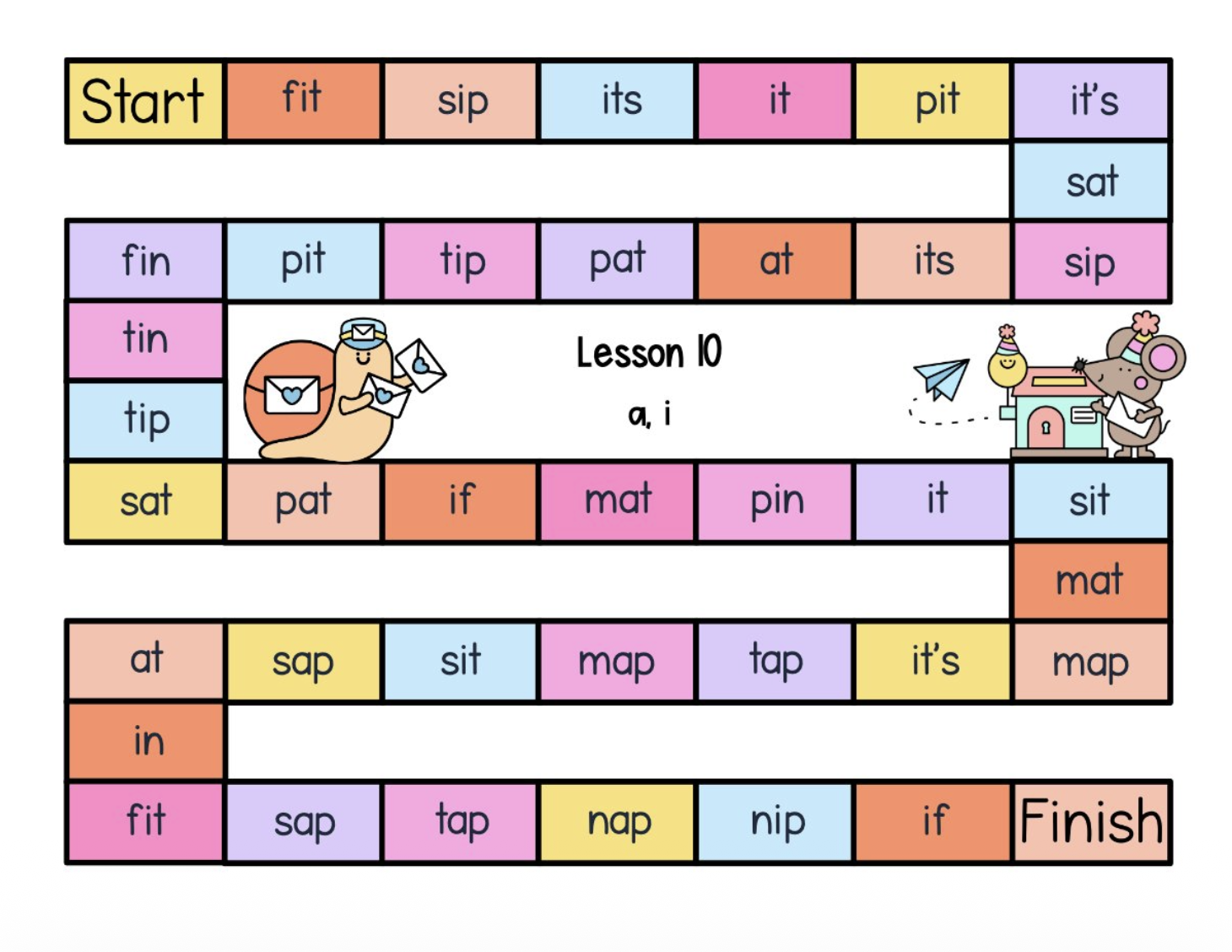
Literacy boardgames transform skill practice into exciting adventures. Students move along game paths, reading decodable text and decoding words to progress toward goals. When designed as UFLI worksheets for kindergarten, these gamified activities maintain engagement while providing authentic literacy practice aligned to scope and sequence. The visual reward of moving forward on a path provides powerful motivation for sustained practice and skill development.
What Are Literacy Boardgames?
Literacy boardgames combine traditional game board mechanics with phonetic and decoding practice. Students roll dice or spin spinners to advance along a path, reading text or decoding words at each space. The game ends when someone reaches the goal, making progress toward mastery feel like an exciting journey rather than repetitive practice.
Why Boardgames Support Learning
Game-based learning activates multiple motivation systems:
- Progress Tracking - Visible movement shows advancement
- Goal Orientation - Clear end point maintains focus
- Reward Systems - Reaching the end provides genuine satisfaction
- Social Engagement - Playing with peers increases motivation
- Autonomy - Students make choices about how to play
Types of Literacy Skills Boardgames Can Address
Literacy boardgames can focus on various skills depending on the target:
- Phoneme Recognition - Land on spaces requiring sound identification
- Decoding Practice - Read words at each space
Implementing Boardgames in Your Classroom
Effective Strategies:
- Literacy Centers - Station them at partner or independent practice centers
- Small Group Instruction - Use with guided reading groups for targeted practice
- Classroom Motivation - Track progress toward classroom goals using games
- Fluency Practice - Games encourage repeated reading of text
Benefits Beyond Literacy Skills
Literacy boardgames develop important non-academic skills:
- Social interaction and cooperation
- Turn-taking and rule-following
- Persistence in face of challenges
- Healthy competition and sportsmanship
- Self-regulation and impulse control
- Engagement and intrinsic motivation
Aligning Boardgames to UFLI Scope and Sequence
The most effective UFLI worksheets for kindergarten, such as literacy boardgames, are aligned to where students are in their learning progression. Early games use simple CVC words. As students progress through lessons, games increase in complexity with digraphs, blends, CVCe, and longer words. This ensures games remain appropriately challenging and relevant to current instruction, maximizing their impact on literacy growth.
From Reluctant to Eager Readers
Many struggling readers find traditional practice boring or frustrating. Games reframe practice as something fun. Students who resist worksheets often happily play UFLI worksheets for kindergarten presented as games because the game context removes the pressure while maintaining authentic literacy practice. This shift from perceived "work" to "play" can transform a struggling reader's attitude toward literacy instruction and engagement.