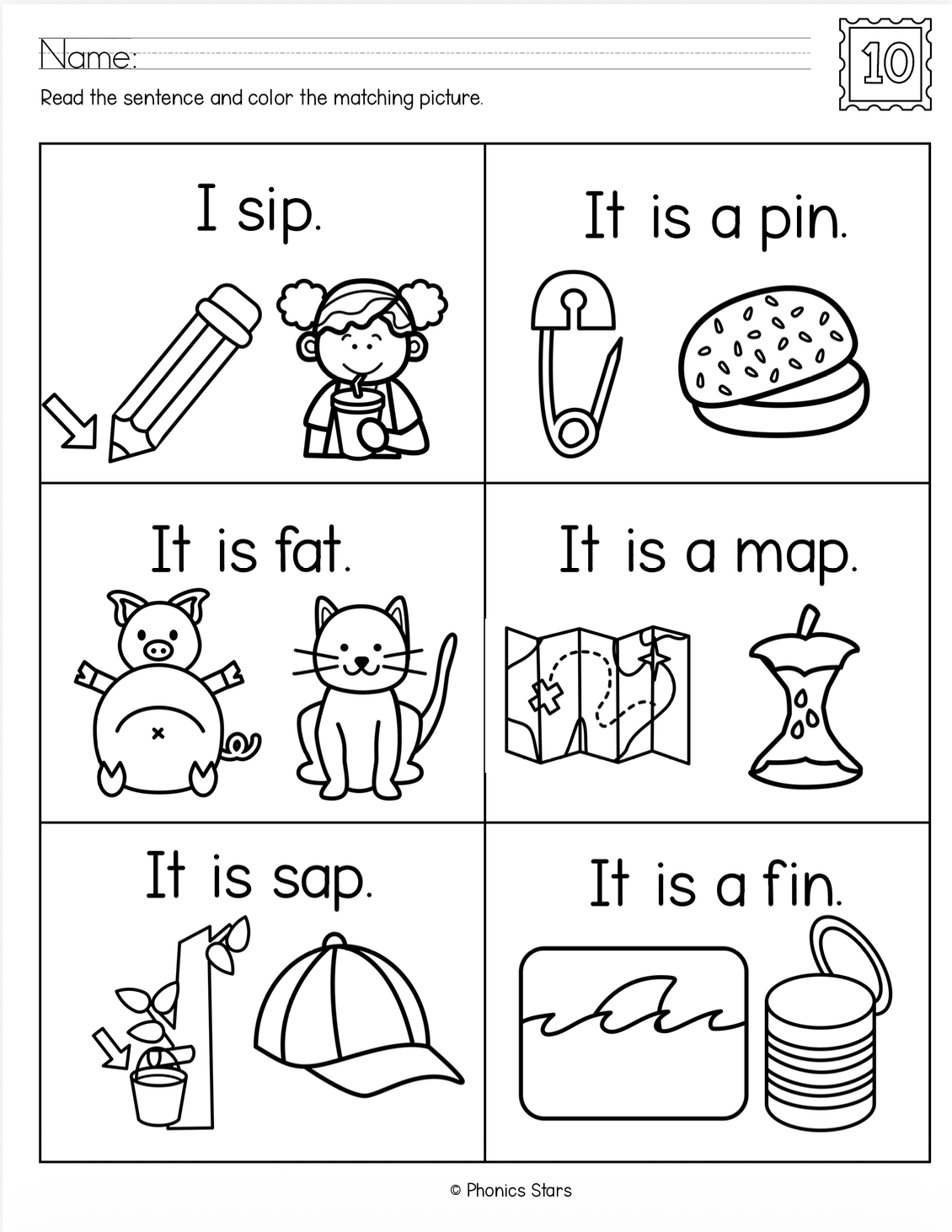
Read and Match worksheets are an activity type that bridges decoding skills with comprehension. In these UFLI worksheets for Kindergarten, students read sentences and match them to corresponding pictures, creating a bridge between phonetic decoding and meaning-making. As part of effective UFLI worksheets for kindergarten, Read and Match activities help students develop both phonetic skills and reading comprehension. Let's explore how this simple but powerful activity supports kindergarten literacy development.
What Are Read and Match Worksheets?
Read and Match worksheets present students with decodable words in simple sentences alongside picture options. Students read the text, comprehend its meaning, and select the corresponding picture. This activity serves multiple literacy purposes simultaneously:
- Reinforces phonetic decoding of individual words and sentences
- Develops sentence-level comprehension
- Builds vocabulary in context
- Provides visual support for meaning-making
- Engages students with varied picture contexts
Why Read and Match Matters in Kindergarten
Decoding without comprehension is not reading. While phonics instruction teaches students to decode words, comprehension activities ensure they understand what those words mean in context. UFLI worksheets for kindergarten, like Read and Match, make this connection explicit and practice-based.
For kindergarteners, especially those still building sight word recognition and sentence processing skills, the visual support of picture options removes some cognitive load while still requiring authentic reading work. This scaffolded approach helps students succeed while gradually building independence. When implemented as part of comprehensive UFLI worksheets for kindergarten instruction, Read and Match activities reinforce both decoding accuracy and comprehension development.
How to Use Read and Match Worksheets
Effective Implementation Strategies:
- Whole Group Instruction - Model thinking aloud: "Let me read this sentence... 'The cat is big.' Now I need to find the picture that matches. I see a big cat here."
- Guided Practice - Work through first few examples together, then gradually release responsibility to students
- Independent Practice - Once students understand the format, use for independent literacy center work
- Small Group Intervention - Use with struggling readers who need additional comprehension support
- Assessment - Observe which picture choices students make to identify comprehension gaps
Benefits of Read and Match for Student Learning
Read and Match worksheets offer several key benefits for kindergarten literacy development:
- Authentic Reading Practice - Students read for meaning, not just for decoding practice
- Vocabulary Development - Exposure to words in meaningful contexts
- Confidence Building - Picture support provides accessibility for emerging readers
- Engagement - Visual elements maintain student interest and motivation
- Differentiation Ready - Easy to modify with different text complexity levels
The combination of decoding practice (phonics focus) and comprehension practice (meaning focus) in Read and Match worksheets makes them a powerful tool for comprehensive literacy instruction that addresses both the "how to read" and "reading to understand" aspects of the reading process. When you select UFLI worksheets for kindergarten that include Read and Match activities, you're choosing resources specifically designed to develop both skills simultaneously—a critical component of effective science of reading instruction.